How to Paint Stucco: Steps & Tips for Exterior Prep & Application
How to paint stucco correctly starts with thorough surface preparation, crack repair, and using elastomeric or 100% acrylic paint designed for textured masonry surfaces. Stucco requires a thick-nap roller or sprayer to reach into its porous texture.
Late spring and early fall are the only reliable stucco painting windows in the Central Valley. Once daily highs push past 95°F, paint flashes off the sun-facing walls before it can level and bond. After 44 years of providing painting services across Bakersfield and Kern County, Steve Holloway Painting methodically follows a process that works in this climate: inspection and repair, pressure washing and priming, then application with the right tools and timing. The steps below cover what separates a finish that lasts 8 years from one that peels within 2.
Inspect and Repair Before Anything Else
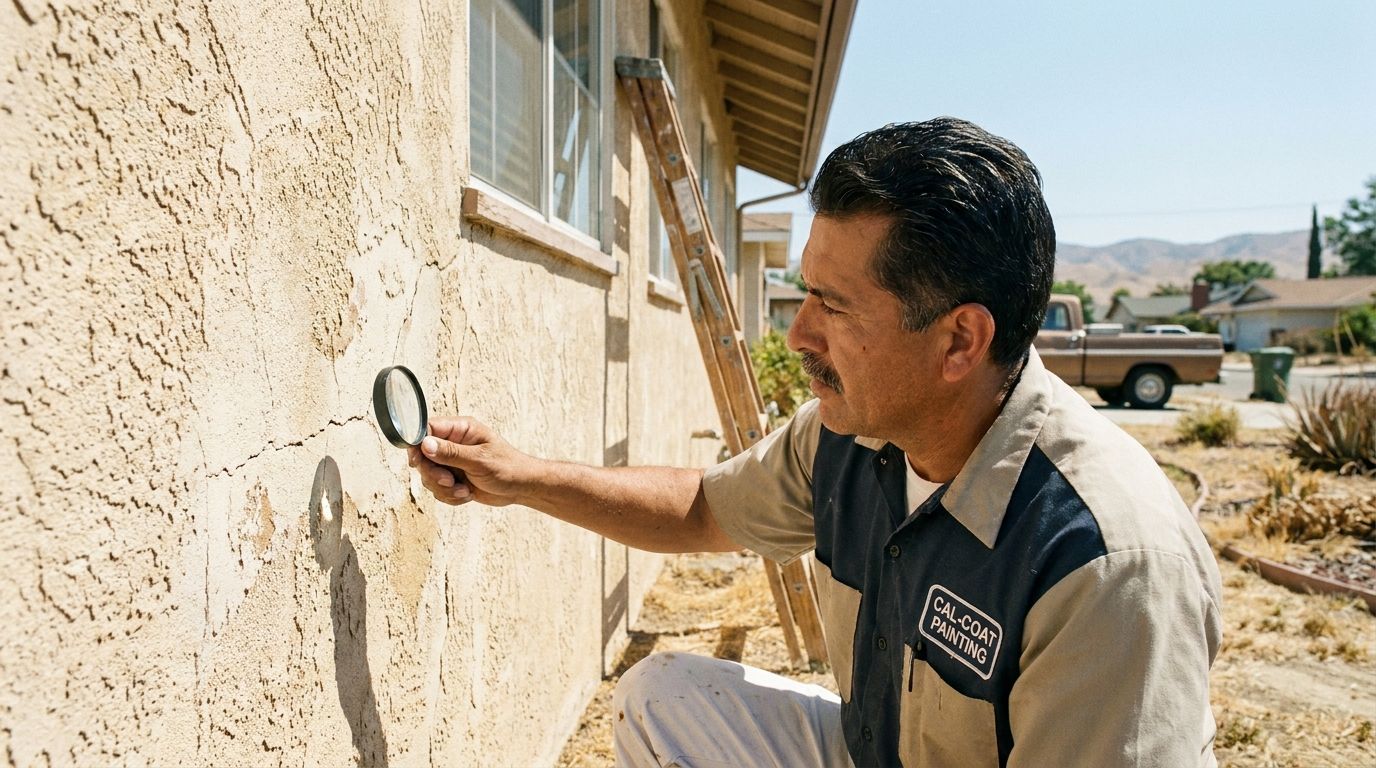
Stucco develops hairline cracks from Bakersfield's temperature swings—30°F winter mornings to 110°F summer afternoons cause repeated expansion and contraction. Before any paint touches the wall, walk the entire exterior looking for:
- Hairline cracks around windows, doors, and corners
- Soft spots indicating moisture trapped behind the surface
- White chalky deposits (efflorescence) from mineral salts
- Bubbling or flaking from previous paint failures
Fill cracks with elastomeric caulk rated for masonry. Cracks wider than 1/8 inch need patching compound applied in layers. Allow all repairs to cure fully (24 to 48 hours minimum) before moving to the next step. Painting over uncured patches traps moisture and often leads to early failure.
Pressure Wash and Prime the Surface
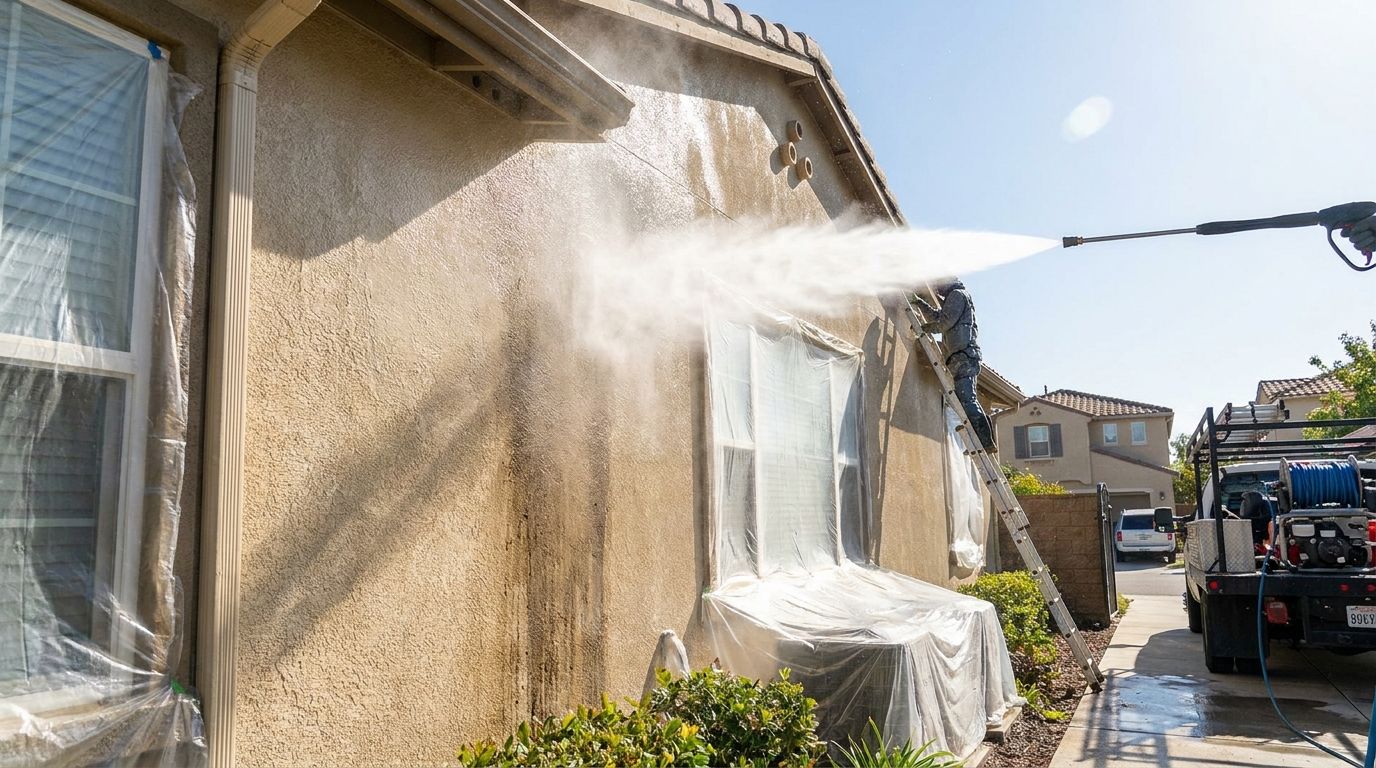
Stucco's porous texture traps dust, pollen, and oilfield particulates that prevent paint adhesion. Bakersfield's air quality (among the worst in the U.S. for particulate matter) means exterior surfaces accumulate grime faster than in cleaner air markets.
Washing Technique
Use 2,500 to 3,000 PSI at a 12 to 18 inch distance from the wall. Work top to bottom in overlapping passes. Never spray upward. Forcing water behind the stucco causes delamination. Allow 48 to 72 hours of dry time before priming.
Primer Selection
Apply an alkali-resistant primer with a 3/4 to 1-1/2 inch nap roller to reach deep into the stucco texture. New stucco (under 30 days old) requires alkali-resistant primer specifically because fresh concrete is highly alkaline and will destroy standard primer chemistry. Allow 24 hours between primer and topcoat.
Apply Paint With the Right Tools and Technique
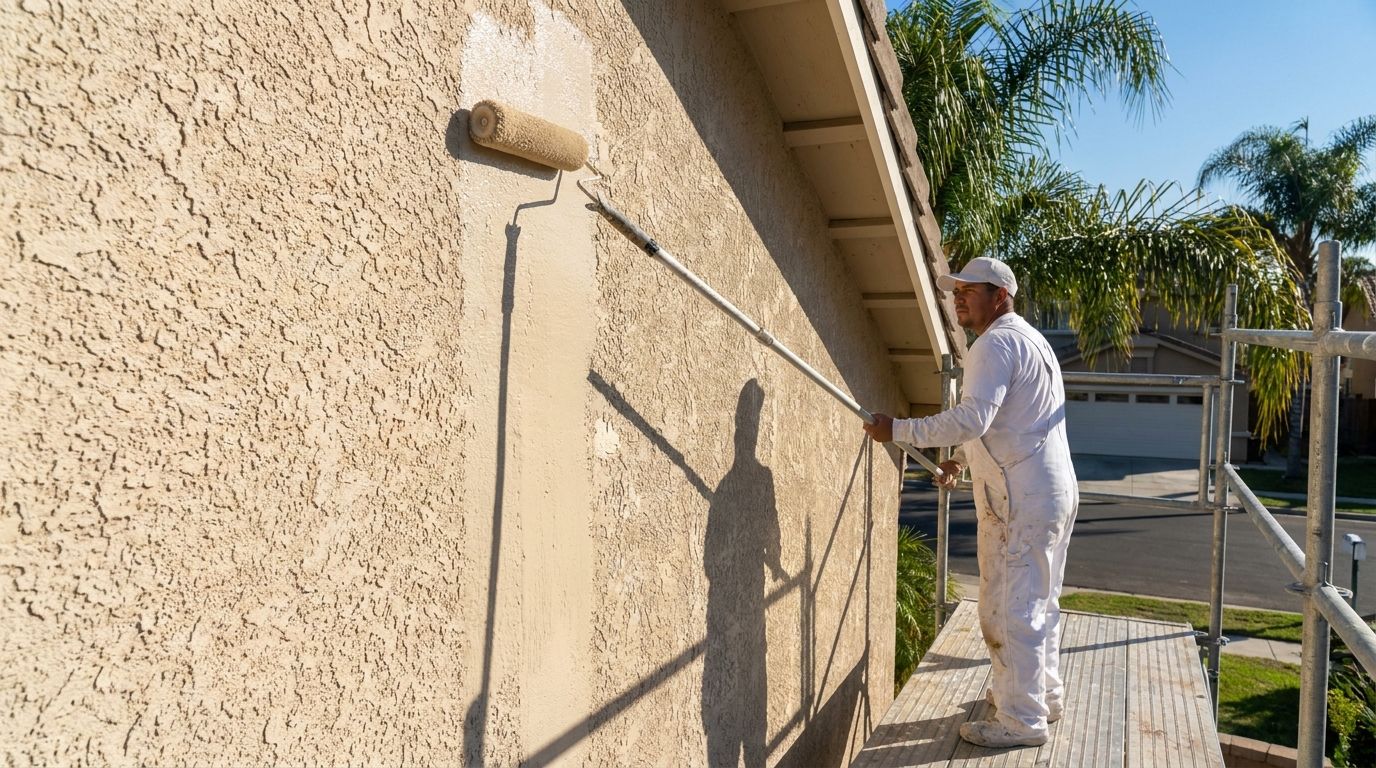
Elastomeric paint is the top choice for Central Valley stucco. Its flexibility allows it to stretch with the substrate as temperature cycles expand and contract the wall. Standard latex works but won't bridge cracks the way elastomeric formulas do.
Application rules for stucco:
- Use a 3/4 to 1-1/2 inch nap roller or airless sprayer for full texture coverage
- Apply two coats minimum for proper build thickness
- Maintain a wet edge to avoid visible lap marks on the textured surface
- Work in manageable 4x4 foot sections from top to bottom
- Paint when surface temperature is between 50-90°F and walls are in shade
Properly painted stucco in Bakersfield's climate lasts 5 to 7 years before needing a refresh. Cutting corners on prep or skipping the second coat can significantly reduce that lifespan.
Frequently Asked Questions
Can I paint new stucco right away?
New stucco must cure for a minimum of 30 days before any primer or paint is applied. Fresh stucco contains significant moisture and has a high alkaline pH that breaks down paint chemistry. Painting too early causes bubbling, peeling, and adhesion failure within the first year.
Should I roll or spray stucco exterior walls?
Both methods work when done correctly. Rolling with a thick-nap roller pushes paint deep into stucco's pores and gives better adhesion on textured surfaces. Spraying covers faster but requires backrolling for full penetration. Steve Holloway Painting's exterior painting services match the method to the project's texture depth and size.
What causes stucco paint to peel in Bakersfield?
Insufficient surface prep is the top cause. Painting over dust, efflorescence, or uncured patches creates a weak bond layer. The second most common cause is applying paint in direct sun above 90°F, which flash-dries the coating before it can penetrate the texture and form a lasting mechanical bond.
The Bakersfield Stucco Pros You Want on the Job
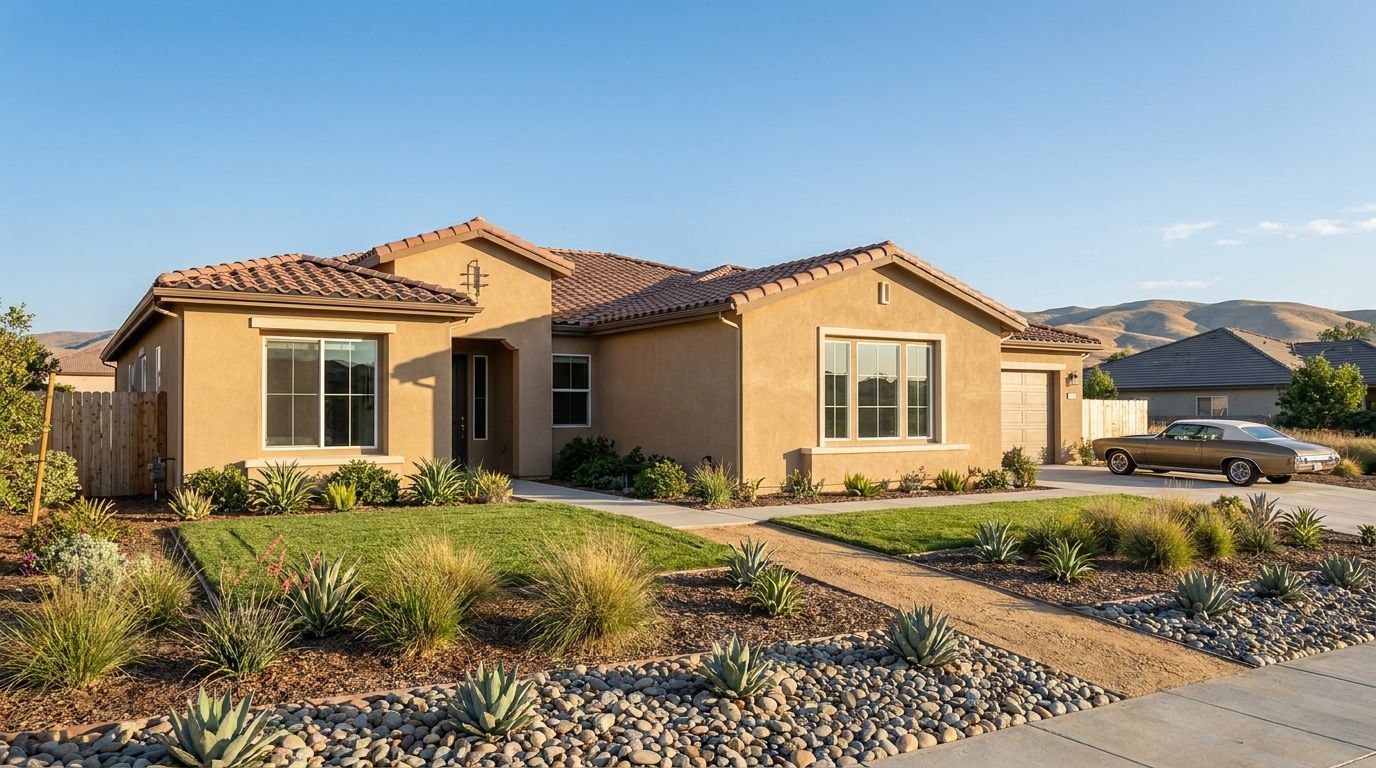
Steve Holloway Painting has been painting stucco exteriors across Bakersfield and Kern County since 1982. Our exterior painting process covers crack repair with elastomeric caulk, alkali-resistant priming, application with thick-nap rollers or sprayers, and timing around the seasonal heat windows that determine whether stucco paint actually bonds. Every job starts with a free on-site assessment of the existing surface before we quote anything.
Call (661) 325-8520 or request a free estimate to schedule that assessment.